 Bins-USA™
 3PL vs In-House Fulfillment: A Practical Guide for Ecommerce Sellers in 2026
Choosing between a third-party logistics provider and running your own warehouse is one of the most consequential decisions an ecommerce seller can make. Get it wrong and you'll either bleed money on unused space or lose control of the customer experience that built your brand.
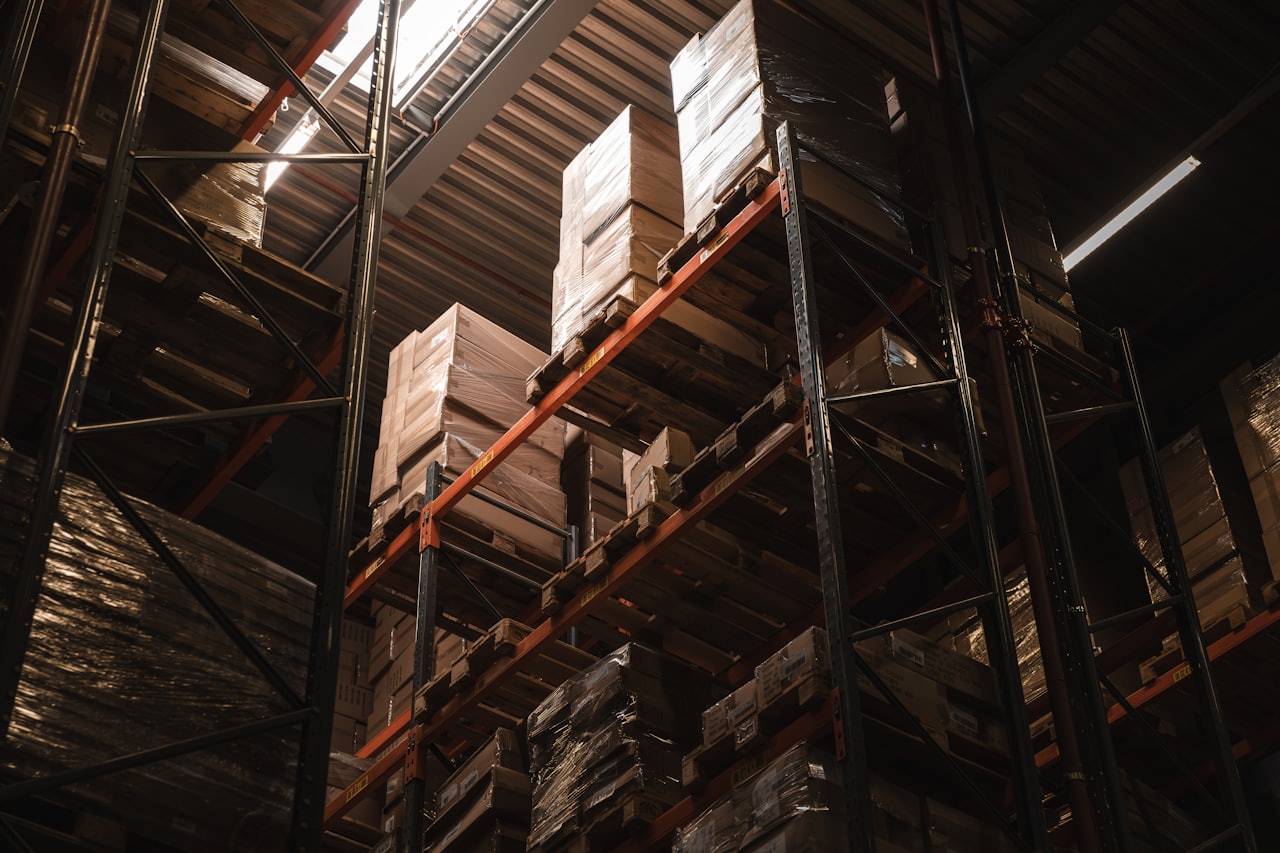
What Do "3PL" and "In-House Fulfillment" Actually Mean?
In-house fulfillment means your team physically stores inventory, picks orders, packs boxes, and hands shipments to carriers — whether from a spare bedroom, a leased warehouse, or anything in between. You own every step of the process.
Third-party logistics (3PL) means outsourcing some or all of those steps to a specialist provider. You send bulk inventory to the 3PL's facility; they receive orders (usually via API integration) and ship on your behalf.
Neither model is universally superior. The right answer depends on your order volume, product type, margin structure, growth trajectory, and how much operational control matters to your brand.
The Real Costs: In-House vs 3PL Side by Side
Cost comparisons are often misleading because sellers forget to count all the costs on the in-house side. Here is a fuller picture:
- In-house fixed costs: Lease or mortgage, utilities, shelving and bins, packing equipment, labor (wages + benefits + turnover), insurance, and your own time.
- In-house variable costs: Packing materials, carrier rates (usually retail or small-business tiers), and the opportunity cost of your management bandwidth.
- 3PL fixed costs: Typically low — most charge monthly minimums only after a threshold of orders or pallets.
- 3PL variable costs: Receiving fees, per-unit storage fees, pick-and-pack fees per order line, and outbound shipping (often at discounted carrier rates you couldn't negotiate alone).
A useful rule of thumb: if your monthly order count is under ~300–500 and your SKU count is manageable, in-house often wins on cost. Above ~1,000 orders per month — especially with seasonal spikes — a 3PL's economies of scale and elastic labor pool start to look very attractive.
Control, Branding, and the Customer Experience
In-house fulfillment gives you complete control over packaging, inserts, gift wrapping, and inspection quality. For brands where unboxing is part of the product — toys, artisan goods, boutique apparel — that control is genuinely worth paying for.
3PLs have improved dramatically on this front. Many offer custom packaging programs, branded tissue paper, and QC holds. However, mistakes happen, and when they do, you are one step removed from fixing them quickly.
The honest trade-off: in-house = higher control ceiling, higher labor cost; 3PL = lower control ceiling, lower operational burden. Some sellers split the difference by fulfilling VIP and wholesale orders in-house while routing standard DTC orders to a 3PL.
Scalability and Seasonal Demand
Seasonal businesses face the sharpest version of this dilemma. If you sell children's products, holiday décor, or back-to-school supplies, your Q4 volume might be 5× your Q1 volume. Signing a lease and hiring staff for peak capacity means carrying expensive overhead for eight slow months.
3PLs thrive on exactly this scenario. Their shared-labor model lets you scale up instantly and scale back down without layoffs or idle square footage. This is one of the strongest arguments for outsourcing, especially for early-stage brands still learning their seasonal curve.
On the flip side, a high-volume seller with consistent, predictable demand often finds that owning the operation — and the margin — beats paying per-pick fees all year long.
Inventory Visibility Is Non-Negotiable Either Way
Here is where many sellers get tripped up: they assume moving to a 3PL solves their inventory visibility problem. It doesn't — it makes it harder, because your stock now lives in someone else's building.
Whether you fulfill in-house or use a 3PL, you need a warehouse management system (WMS) that syncs inventory in real time across every sales channel. Without it, you risk overselling on Shopify while your 3PL is still processing a return, or showing in-stock on Amazon when your 3PL's bin is actually empty.
A purpose-built WMS like Bins-USA deducts stock at pick time — not at shipment — and pushes updated counts to Shopify, Faire, Amazon, eBay, and Walmart simultaneously. That single source of truth matters whether your pickers are your own employees or a 3PL's staff. Learn more about keeping counts accurate across platforms in our guide to multichannel inventory management.
How to Make the Decision: A Practical Framework
Run through these five questions before committing:
- Order volume: Are you shipping fewer than 500 orders per month consistently? In-house is likely more cost-effective today.
- Growth rate: Are you doubling year over year? Build with the next 12 months in mind, not the last 12.
- SKU complexity: Do you have hundreds of size/color variants or hazmat products? Some 3PLs excel here; others charge premium fees or refuse entirely.
- Brand experience: Is custom packaging or same-day personal inspection core to your value proposition? Weight that control premium honestly.
- Cash flow: Can you absorb a warehouse lease and full-time staff, or do you need variable costs that flex with revenue?
Many growing brands land on a hybrid model: in-house for wholesale and custom orders, 3PL for standard ecommerce fulfillment. The key to making a hybrid work is a WMS that treats both locations as one unified inventory — so a sale on any channel pulls from the correct pool without manual reconciliation.
Red Flags to Watch When Evaluating a 3PL
Not all 3PLs are created equal. Before signing a contract, look for these warning signs:
- No real-time API or webhook integration with your sales channels
- Opaque fee structures with hidden account management or fuel surcharge line items
- Long minimum contract terms with no performance SLAs
- No dedicated account contact — just a generic support inbox
- Inability to handle your specific packaging or kitting requirements
A reputable 3PL will welcome your WMS integration and provide live inventory feeds. If a provider resists connecting to your systems, that resistance will cost you in stockouts and overselling incidents down the road.
Keep Inventory in Sync — Whether You Fulfill In-House or Through a 3PL
Bins-USA is a bilingual cloud WMS built by a real Shopify and Faire seller — so it handles the exact fulfillment scenarios growing multichannel brands face every day. It syncs stock in real time across Shopify, Amazon, Faire, eBay, and Walmart, and deducts inventory at pick time to eliminate overselling no matter who is doing the picking. Start your free trial and see why sellers trust Bins-USA to be their single source of inventory truth.
Start free → See all integrationsFrequently asked questions
- At what order volume should I switch from in-house to a 3PL?
- There is no universal threshold, but most ecommerce operators find that a 3PL becomes cost-competitive somewhere between 500 and 1,000 shipped orders per month — especially when you factor in the true cost of warehouse space, labor, and your own time. Run a full cost-per-order comparison that includes overhead, not just packing materials.
- Can I use both a 3PL and in-house fulfillment at the same time?
- Yes, and many scaling brands do exactly that. A common hybrid is to fulfill wholesale and custom orders in-house for full quality control, while routing standard DTC orders to a 3PL for speed and flexibility. The critical requirement is a WMS that treats both locations as one unified inventory pool so every sales channel always shows accurate stock.
- How does a WMS help when using a 3PL?
- A WMS connects to your 3PL via API, receives real-time inventory updates from their warehouse, and immediately syncs those counts to all your sales channels. It also deducts stock at pick time rather than at shipment, which closes the gap where overselling most commonly occurs. Without this layer, you are relying on manual exports and spreadsheets that are always at least a few hours out of date.
- Do 3PLs work well for sellers on multiple channels like Shopify, Amazon, and Faire?
- They can, but the multichannel complexity is your responsibility to manage — not the 3PL's. A 3PL fulfills the orders you send them; they do not reconcile inventory across channels for you. That reconciliation is the job of your WMS. Choose a WMS that has native integrations with every channel you sell on before committing to a 3PL.
- What is the biggest hidden cost of in-house fulfillment?
- Founder or manager time is almost always the largest hidden cost. Picking, packing, troubleshooting carrier issues, and managing part-time staff can easily consume 20–30 hours per week that could otherwise go toward marketing, product development, or sales. When you price your own time at a realistic hourly rate, in-house fulfillment often looks far more expensive than the lease and labor line items alone suggest.