 Bins-USA™
 How to Manage Wholesale and Retail Inventory Together (Without Losing Your Mind)
Running wholesale and retail out of the same warehouse sounds efficient—until a big Faire order wipes out stock your Shopify customers were about to buy. Here's how to handle both channels from a single, always-accurate inventory pool in 2026.
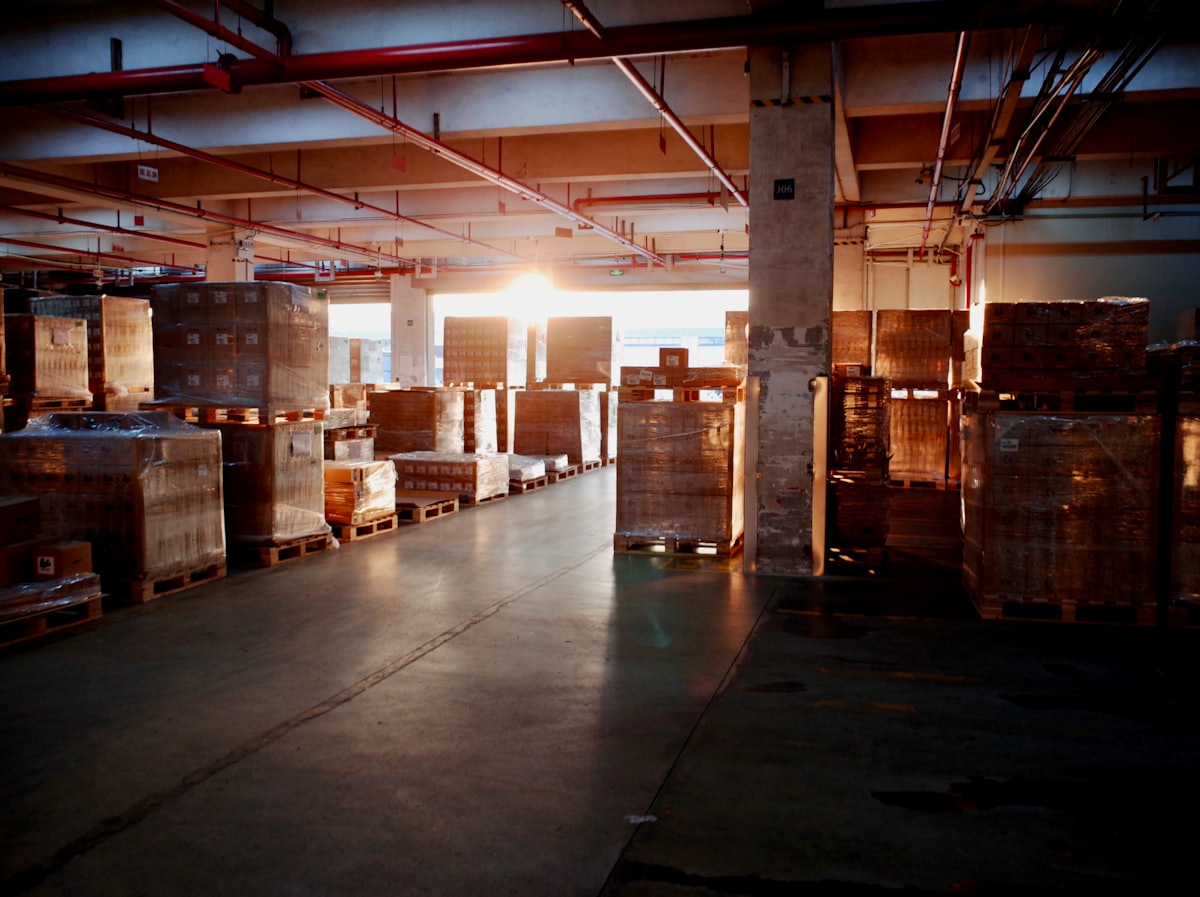
Why Keeping Wholesale and Retail Inventory Separate Is a Losing Battle
Most small and mid-sized brands start with a simple workaround: they manually split stock between wholesale and retail by assigning separate SKUs, spreadsheets, or even physical shelf sections. It works for about five minutes. As soon as volume grows, that system collapses under the weight of double data entry, delayed updates, and the inevitable oversell that costs you a customer relationship.
The real problem is not that you sell on multiple channels—it is that most tools treat each channel as its own isolated silo. Your Faire wholesale orders, Shopify direct-to-consumer sales, and Amazon listings are all drawing from the same physical boxes on your shelves, yet your software pretends they are completely separate pools of stock. Bridging that gap manually is expensive, error-prone, and does not scale.
The Core Principle: One Physical Stock Pool, Many Sales Channels
The solution is conceptually simple: treat your warehouse as one shared pool of inventory, and let software handle the allocation math across every channel in real time. Each time a wholesale buyer on Faire places a net-30 order, or a retail shopper checks out on Shopify, or an Amazon order drops, the system immediately deducts from—and updates—that single pool.
This approach has three concrete benefits:
- No overselling: Every channel sees the same live quantity, so you cannot accidentally promise the same unit twice.
- No phantom stock: Stock is decremented at pick time, not just at order creation, so your counts reflect what is actually still on the shelf.
- No reconciliation headaches: End-of-day counts match because there is only one number to trust.
If overselling is already hurting your Shopify store, the deep-dive at how to stop overselling on Shopify walks through the exact failure points to fix first.
Setting Up a Unified Inventory Structure for Both Channels
Before you connect any software, get your physical and logical structure right. Here is a practical checklist:
- Consolidate SKUs. One product = one SKU, regardless of whether it sells wholesale or retail. Use price tiers or customer groups inside your sales platforms to distinguish pricing, not separate product records.
- Define your warehouse bins. Assign every unit a home location—shelf, bin, or pallet position. This makes pick time deductions accurate and auditable.
- Set channel-level safety stock buffers. Decide how many units you want to reserve for wholesale commitments versus available-to-sell retail. A WMS can enforce these buffers automatically so neither channel cannibalizes the other.
- Map your reorder points. With wholesale, a single PO can move hundreds of units. Set reorder triggers that account for your wholesale minimum order quantities so you are never caught short on either side.
How a WMS Connects Wholesale and Retail in Real Time
A cloud-based warehouse management system (WMS) sits between your sales channels and your physical stock. When an order arrives—wholesale or retail—the WMS:
- Reserves the units immediately so they cannot be sold again on any other channel.
- Generates a pick list routed to the correct bin location.
- Deducts confirmed stock the moment a picker scans or confirms the items, rather than waiting for a shipment scan.
- Pushes updated available quantities back to every connected storefront within seconds.
This is exactly what multichannel inventory management looks like in practice—not just syncing numbers between platforms, but enforcing a single source of truth from the warehouse outward.
Bins-USA was designed specifically for sellers who straddle both worlds. Because it was built by a real Shopify and Faire seller (MyKids-USA), it handles the nuances wholesale requires—case-pack quantities, net terms order statuses, and bulk pick batching—alongside the speed that retail fulfillment demands.
Managing Wholesale-Specific Complexity Without Breaking Retail
Wholesale introduces operational quirks that pure retail WMS tools often ignore:
- Case packs and inner packs: Wholesale buyers order by the case; retail sells eaches. Your system must convert units cleanly without double-counting.
- Pending vs. confirmed orders: A Faire order may sit in "pending" status while your retailer awaits approval. Your WMS should soft-reserve those units so retail cannot oversell them, but release the reservation automatically if the order is cancelled.
- Batch picking for large wholesale orders: Pulling 50 units of the same SKU for one wholesale account is very different from picking 1-of-each for 50 retail orders. A good WMS batches these intelligently so your pickers are not walking the warehouse twice.
- Labeling requirements: Wholesale accounts often require specific shipping labels, packing slips, or UCC-128 carton labels. These should generate automatically alongside pick lists.
Measuring Success: KPIs to Watch After Unifying Your Inventory
Once your wholesale and retail channels share a single inventory pool, track these metrics monthly to confirm the system is working:
- Oversell rate: Should drop to near zero within the first billing cycle.
- Inventory accuracy %: Aim for 98 %+ match between system counts and physical counts.
- Order fulfillment time: Unified pick lists and bin locations typically cut pick-to-ship time by 20–40 % compared to manual processes.
- Stockout frequency per channel: Track wholesale and retail separately to catch imbalanced buffer settings early.
- Return rate due to wrong item: A reliable indicator of pick accuracy; should trend downward as bin assignments become consistent.
These numbers give you an objective baseline for proving ROI on your WMS investment—and for spotting which channel is putting the most pressure on shared stock so you can adjust buffers before problems arise.
Ready to Run Wholesale and Retail From One Inventory?
Bins-USA is a bilingual cloud WMS built by a real Shopify and Faire seller, so it handles every quirk of managing wholesale and retail inventory together—case packs, channel buffers, real-time sync, and batch picking all included. Start your free trial today and see how fast a unified inventory pool can transform your fulfillment operation.
Start free → See all integrationsFrequently asked questions
- Can I sell the same product wholesale and retail without creating separate SKUs?
- Yes—and you should. Using one SKU per product and managing pricing through channel-level price tiers or customer groups is far cleaner than duplicate SKUs. A WMS like Bins-USA tracks a single quantity for that SKU and deducts it correctly regardless of whether the order came from Faire, Shopify, or any other channel.
- How do I prevent a large wholesale order from wiping out my retail stock?
- Set channel-level safety stock buffers inside your WMS. For example, you can reserve 50 units as always-available-for-retail and only expose stock above that threshold to wholesale buyers. Bins-USA lets you configure these buffers per channel so both sides of your business are protected automatically.
- What happens to reserved wholesale units if the buyer cancels the order?
- A proper WMS uses a soft-reservation model: units are held when an order is placed and released immediately if the order is cancelled or rejected—no manual adjustment required. This means your available-to-sell count on retail channels updates in real time rather than sitting locked behind a dead order.
- Is a cloud WMS suitable for a small brand that is just starting wholesale?
- Absolutely. Cloud WMS platforms are subscription-based with no hardware investment, and Bins-USA was purpose-built for small-to-mid-sized sellers entering the wholesale market. Starting with proper inventory infrastructure early prevents the manual-spreadsheet debt that slows most brands down once wholesale volume picks up.
- Does Bins-USA support both English and Spanish for warehouse staff?
- Yes. Bins-USA is a fully bilingual platform (English and Spanish), which means your entire warehouse team—pickers, packers, and managers—can work in their preferred language without switching tools or creating communication gaps on the floor.